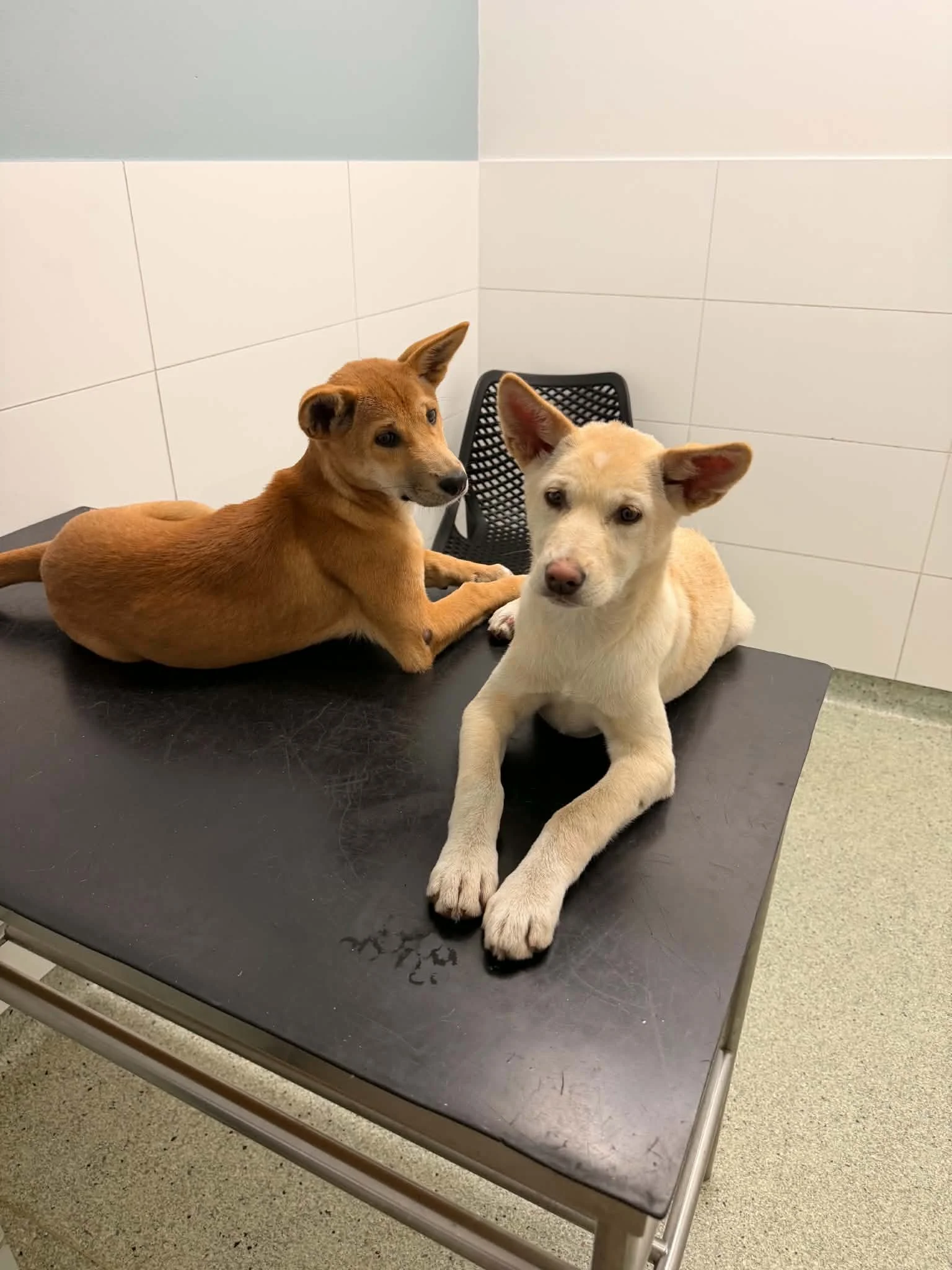
Meet The Panel - Who are Perth Dingo Rescue?
Dingoes are one of Australia’s most recognisable animals, yet few species are surrounded by so much misunderstanding. For Perth Dingo Rescue, changing that begins with seeing dingoes for what they actually are — not monsters, not domestic dogs, and not animals that need to be romanticised in order to deserve respect.
What began with founder Lara helping to rehome a dingo named Saki has grown into a registered charity dedicated to rescuing, rehabilitating and rehoming dingoes and dingo hybrids, while challenging some of the misconceptions that continue to shape the way they are treated across Australia. Ahead of joining us as guests at the Perth screening of On The Fence, on November 24th 2026, we spoke with the team about their work, the realities of caring for dingoes, the challenges they face in Perth, and why changing the future for dingoes starts with changing the conversation around them.
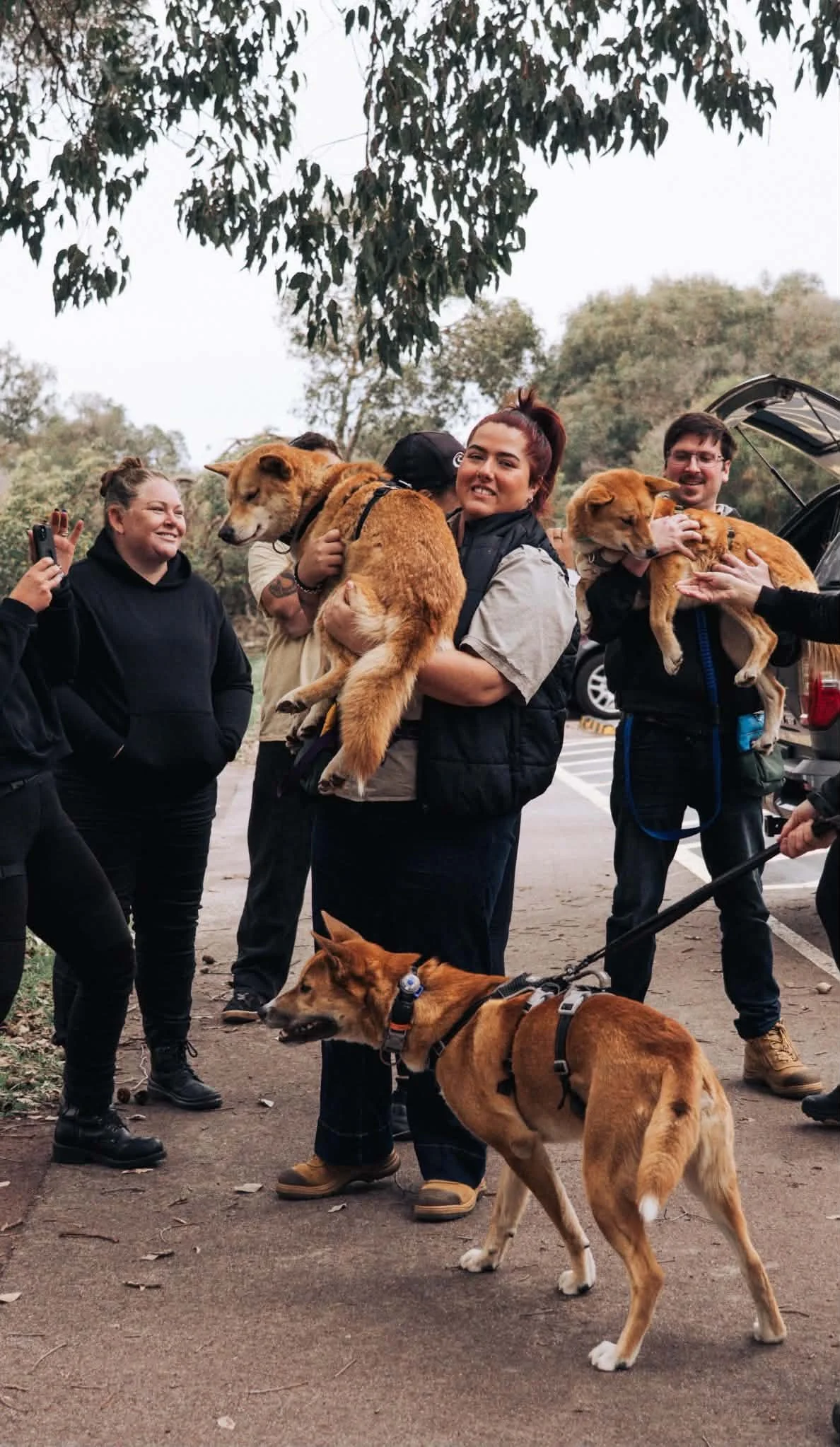
1. Can you give us a quick introduction to Perth Dingo Rescue and how the organisation first began?
Hi! I’m Lara, founder and one of the directors of Perth Dingo Rescue.
Perth Dingo Rescue, or PDR, actually began almost completely by accident!
At the time, I was already guardian to a black and tan alpine dingo who had come to me with his own challenges and had taught me an incredible amount about dingoes, their behaviour and just how misunderstood they can be.
I was approached by someone needing to rehome their dingo, Saki. I wasn’t in a position to take her on myself, but I was determined to help her find the right home. Saki was successfully rehomed, and from there, word simply started to spread.
One dingo became another, then another, and before I really knew what had happened, I’d successfully helped rehome around ten dingoes, and Perth Dingo Rescue was born.
At the time, there were no active dingo specific rescue organisations in WA equipped to take these animals on, understand their unique needs, advocate for them, and rehome them appropriately. So, in the beginning, PDR really was a one woman operation. I saw a gap that desperately needed filling and decided to do something about it.
What started with a love for dingoes and a willingness to help quickly grew into something much bigger. Today, PDR is a registered not-for-profit and charity working across rescue, rehabilitation, rehoming, education and advocacy.
We’ve grown considerably since those early days, but the heart of PDR hasn’t changed. We’re a group of people who genuinely adore these animals and believe they deserve the opportunity to be understood rather than feared, failed or written off.
Sometimes all it takes is someone being willing to give them that opportunity, and that’s ultimately why we’re here.
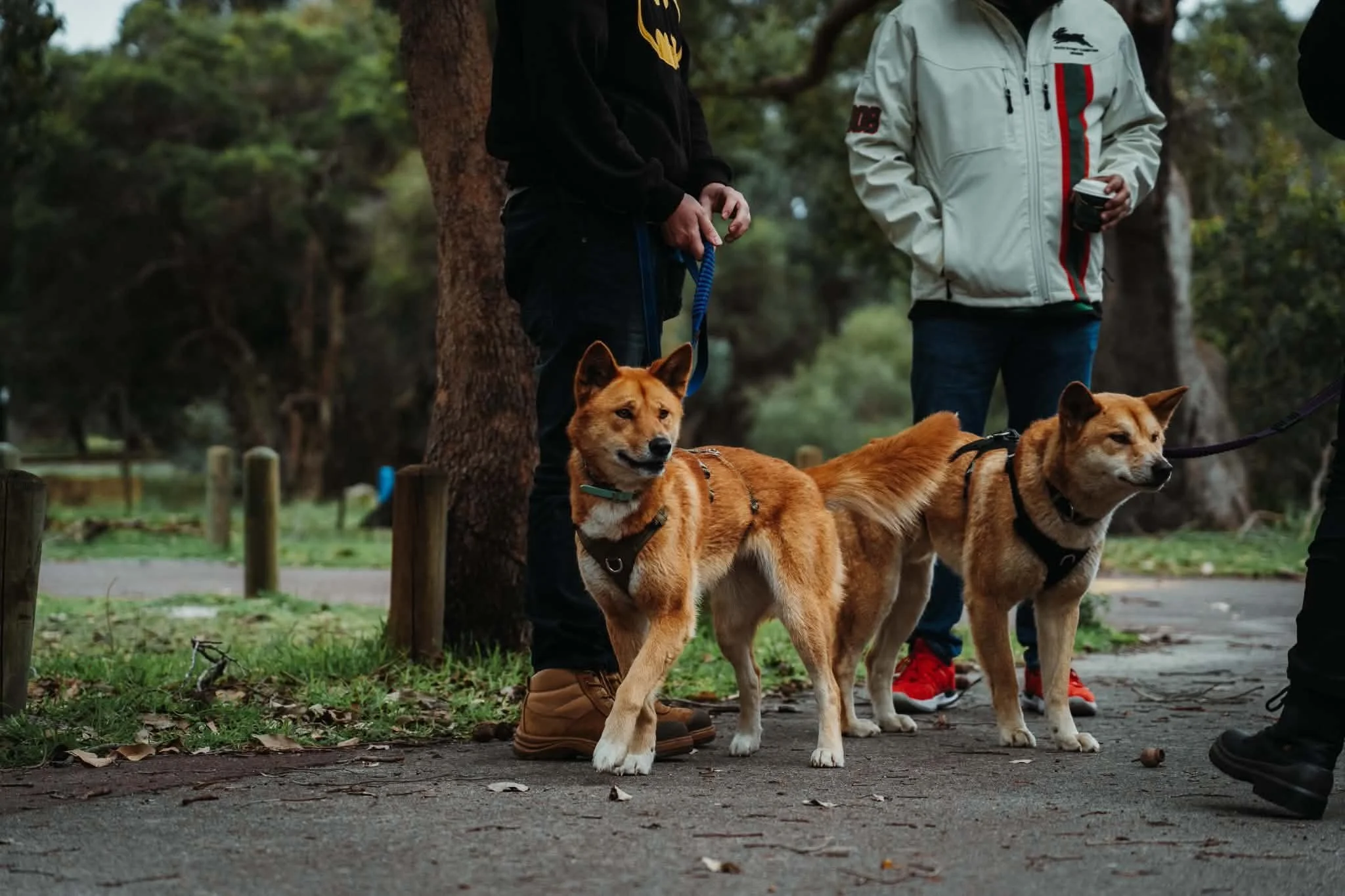
2. What does Perth Dingo Rescue do day to day, and what kinds of dingoes come into your care?
A little bit of everything, and I genuinely mean everything!
Day to day can involve feeding and caring for dingoes, vet appointments, behavioural assessments, coordinating foster carers, processing adoption enquiries, transporting animals, fundraising, answering messages, organising events and educational programs, helping our dingo guardian community and working with other organisations and trying to find solutions for animals that sometimes have nowhere else to go, but we have to be ready for anything that comes our way!
We work with both dingoes (domestic born and wild born) and dingo hybrids from a huge range of circumstances. Some are privately surrendered companion animals, transfers from other rescues and rangers, some have been rescued from pretty awful situations, some require significant rehabilitation, and others are beautiful, well-adjusted animals whose circumstances have simply changed.
No two cases are ever quite the same, but each life is worth it.
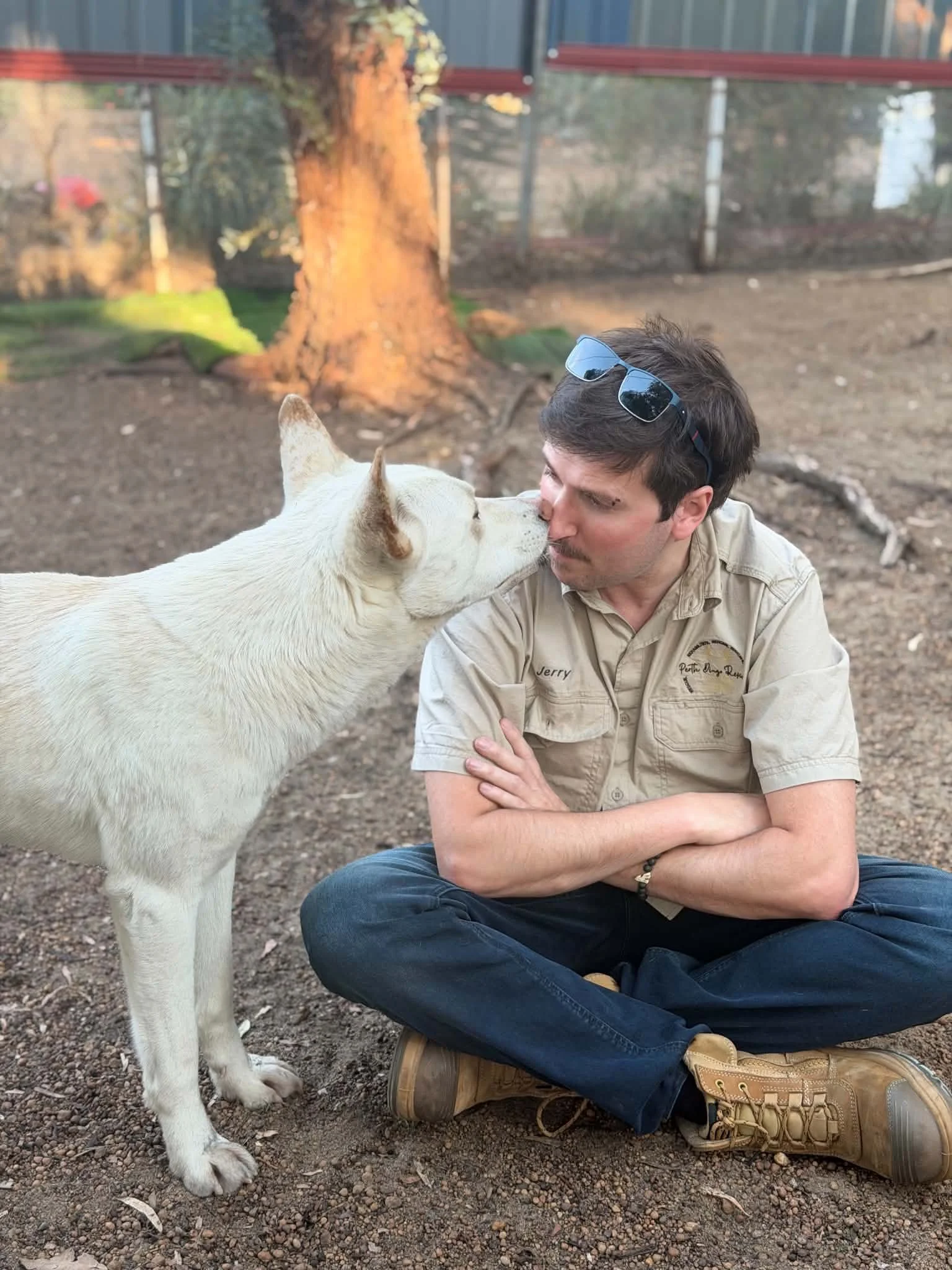
3. What are some of the most common reasons dingoes end up needing rescue or rehoming?
One of the biggest ones is simply people underestimating what they’re taking on.
Dingoes are absolutely incredible animals, but they are not just slightly quirky dogs.
People can fall in love with the idea of having a dingo without fully understanding the fencing, enrichment, socialisation, management, behavioural needs and long-term commitment involved.
We also see changes in people’s circumstances, housing issues, animals escaping inadequate enclosures, behavioural challenges, accidental breeding, backyard breeding and situations where people simply become overwhelmed.
Unfortunately, by the time some of these animals reach rescue, they’ve already been bounced between homes or labelled as “difficult” when really they were an animal whose needs weren’t being met.
4. Is there one rescue story that really sums up why you do this work?
It’s almost impossible to choose one because every single animal leaves something with you.
But some of the cases that stick with me most are the ones where an animal has been completely failed by humans and yet somehow still gives us the opportunity to earn their trust.
We’ve taken in dingoes from situations where their future was incredibly uncertain, including animals who have travelled enormous distances to reach us and puppies who have become critically ill during that journey.
Those are the moments where you’re exhausted, stressed, running on caffeine and spite, wondering how on earth you’re going to pull everything together, and then you watch that animal recover, learn to trust, play, form relationships and eventually become part of a family.
That’s the bit that gets you. They deserved someone to fight for them. So we do.
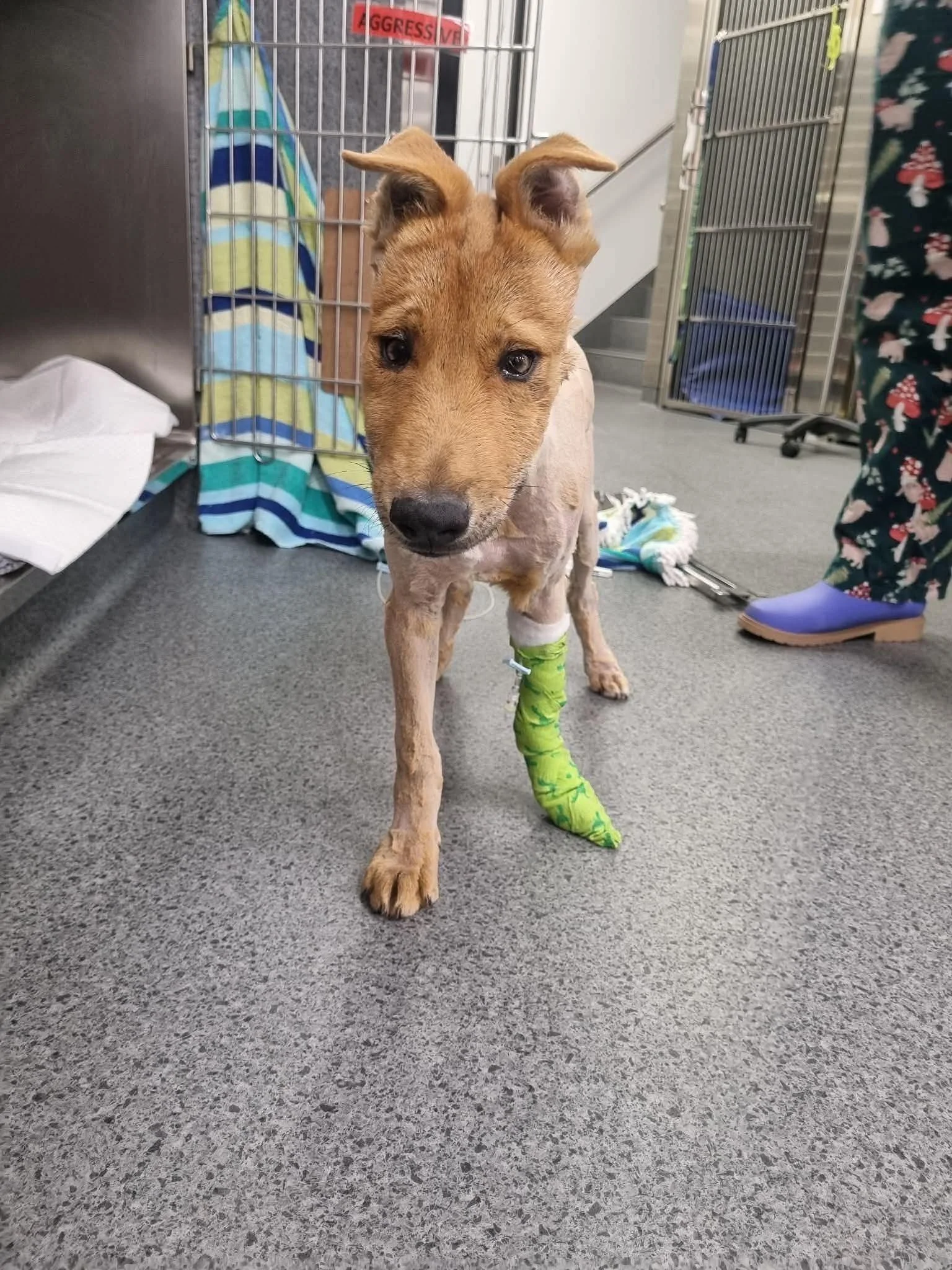
But if I had to, there’s two that forever changed me, this is Yarla’s story:
Imagine waking up one day as a youngster to find out that your world had been flipped upside down and your family ripped away from you. This is an everyday occurrence for our Dingoes.
Little Yarla, 5 weeks old, witnessed her whole family being shot by farmers in the Murchison, too young to fend for herself she tried to get to the closest waterhole and survive on her own, but mange took its grip and without proper life skills it was difficult. Until 2 kind station hands found her and pushed against the tide, to try save this pup.
She was ripped from her home, her family gone, unable to hunt, sickness taking grip, her condition declining. Before she knew it she was stuffed into a cage and in a weird place that was moving for hours. 7hours and 7 minutes. That’s the time it took for it to stop, each second passing pneumonia was setting in. She was passed around somewhere in between, she can’t remember.
From a quiet cage to a strange place, little strangers and big strangers, and another Dingo, like her. The big human took her to strange places, people talking, poking and prodding her, but her skin felt better, she could breathe better, she just wanted her parents.
Scared, Afraid, lost, displaced. Yarla felt this way for over a year in care, with those feelings noticeably still not going away completely, but now 3 years on she is starting to smile, to learn, play and to be a dingo, one signature bum nibble at a time.
5. What do you wish more people understood about dingoes, particularly dingoes living in captivity or being kept as companion animals?
That loving dingoes means respecting what they are.
You don’t need to try turn a dingo into a dog in order to have a relationship with one.
They can be incredibly affectionate, playful, intelligent and deeply bonded to their people, but that relationship has to exist on terms that respect the animal in front of you.
They need appropriate containment, enrichment, socialisation, outlets for natural behaviours and humans who are willing to learn how they communicate rather than expecting them to behave exactly like a domestic dog.
A well managed captive living dingo can have an amazing quality of life, but good ownership requires knowledge, preparation and a willingness to adapt your life around some very uniquely dingo behaviours.
6. What are some of the biggest misconceptions you regularly hear about dingoes?
We somehow hear two complete extremes all the time.
Either dingoes are portrayed as vicious, dangerous animals that can never coexist with humans, or they’re basically described as funny-looking dogs that anyone could own.
Neither is particularly helpful.
Dingoes aren’t monsters, but they also aren’t domestic dogs. We like to describe them as an animal with the brain of a monkey, the behaviour similar to a cat in a dog-suit type body with quirks.
Another huge misconception is that because dingoes have been in Australia for thousands of years, they somehow don’t belong here or aren’t important to Australian ecosystems.
The conversation around dingoes is incredibly complex, but reducing them to “pests” ignores their ecological, and cultural significance to say the least.
We need to be capable of having a much more nuanced conversation about them, and be open to learning about them.
7. What makes a dingo different from a domestic dog when it comes to their behaviour, needs and the way people should interact with them?
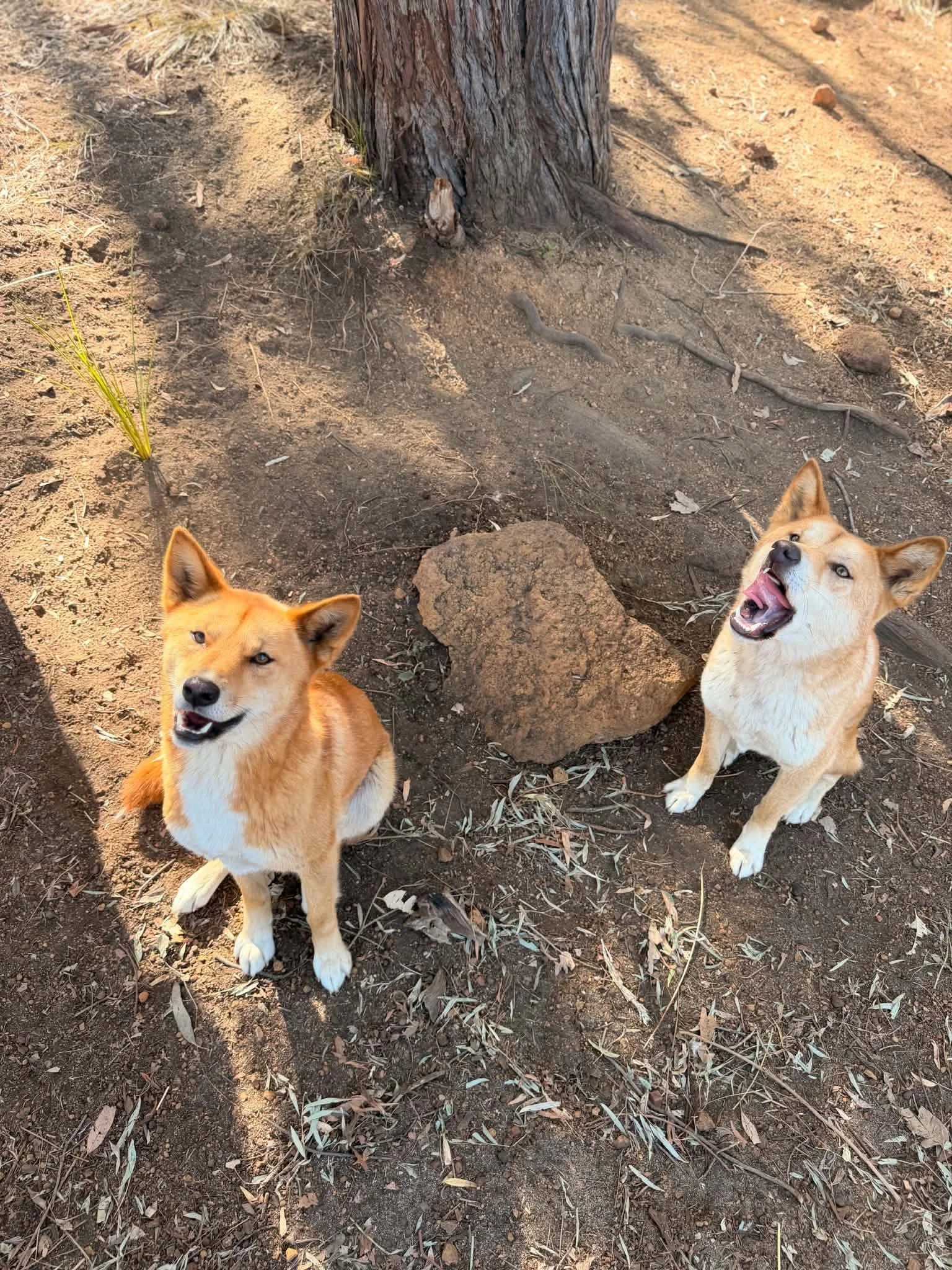
The biggest thing I tell people is: stop expecting dog behaviour from a dingo. Better yet, expect nothing and you’ll never be disappointed.
They’re incredibly intelligent, independent problem solvers. They tend to think about why they should do something rather than automatically looking to a human for direction.
They can be phenomenal escape artists, environmentally sensitive, incredibly observant and much more subtle in some of their communication.
Building a relationship with a dingo is less about commanding them and much more about trust, consistency, communication and understanding their motivations.
Once you stop comparing them to dogs constantly and start appreciating them as dingoes, they make a lot more sense.
8. What are some of the biggest challenges facing dingoes in Perth at the moment?
One of the biggest challenges is the way dingoes are still perceived and managed.
They sit in this incredibly complicated space where they can be recognised for their ecological and cultural significance in one conversation and treated purely as a pest or threat in another, but if microchipped they entirely fall under the Dog Act.
There are also challenges around lethal control, human-wildlife conflict, hybridisation due to irresponsible dog ownership in WA, habitat pressures and public misunderstanding.
For those in captivity, we also have issues around unsuitable ownership, inconsistent knowledge and a shortage of appropriate places for animals to go when a home breaks down.
There isn’t one simple solution to dingo conservation or management, but continuing to approach such a complex animal with overly simplistic thinking certainly isn’t going to get us there.
9. Why do you think changing the way people see and talk about dingoes is important for their future?
Because language shapes the way we treat things.
If generations of Australians grow up only hearing dingoes described as pests, killers or problems that need controlling, that inevitably influences the policies and management practices we choose to accept as a people.
Education gives people the opportunity to see the whole animal.
Dingoes are intelligent, social, ecologically important animals with an extraordinary history in this country. That doesn’t mean pretending human dingo conflict doesn’t exist, one just has to inform themselves on the dingoes history to see what that was like, but it means being willing to have a more informed conversation about how we respond to it.
You don’t have to romanticise an animal to believe it deserves respect.